01
Do not harvest if doubt remains
Correct identification is non-negotiable. If traits, habitat, contamination risk, or look-alikes remain unclear, stop there.
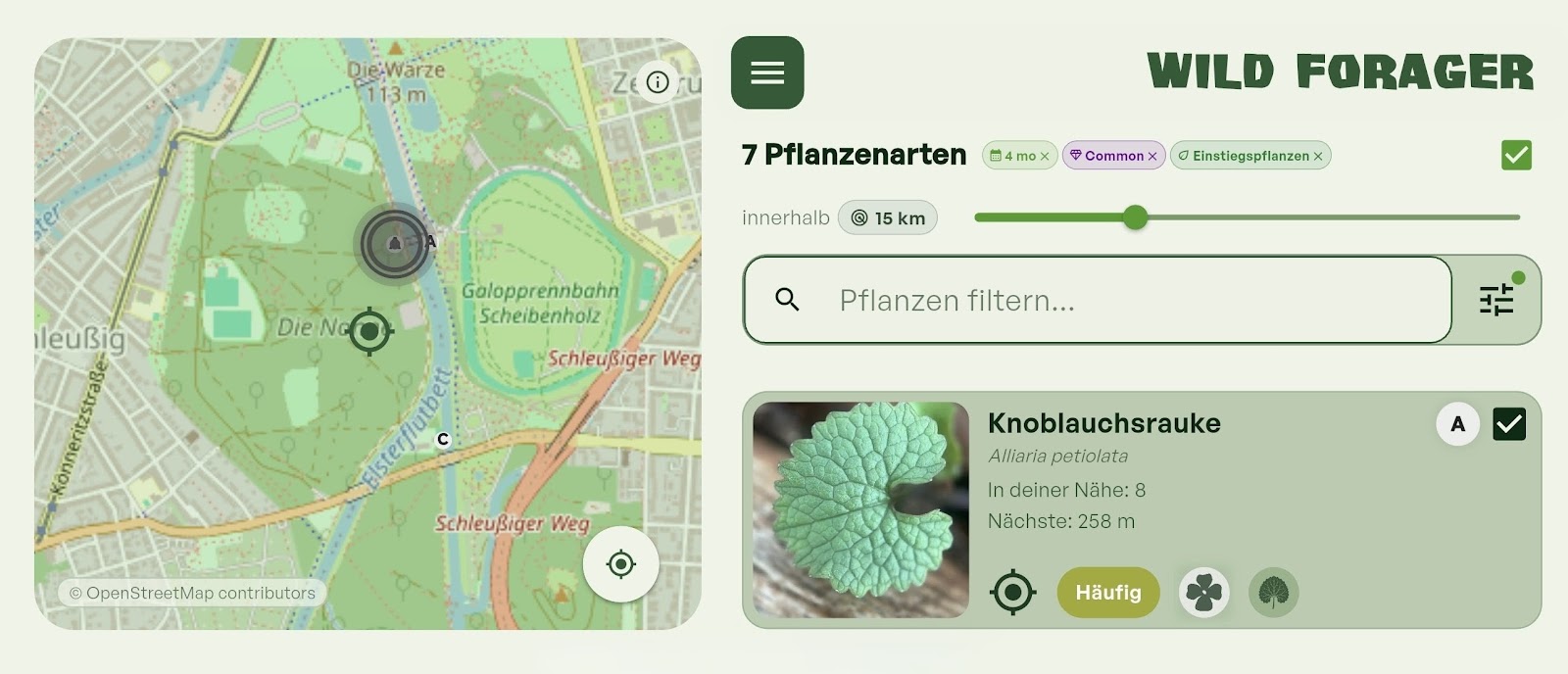
Wild Forager brings nearby biodiversity observations, plant traits, seasonality, and look-alike warnings together in one place.
Built for careful learning, not as a shortcut to harvesting.
Best used with local knowledge, field guides, guided walks, and time outdoors.
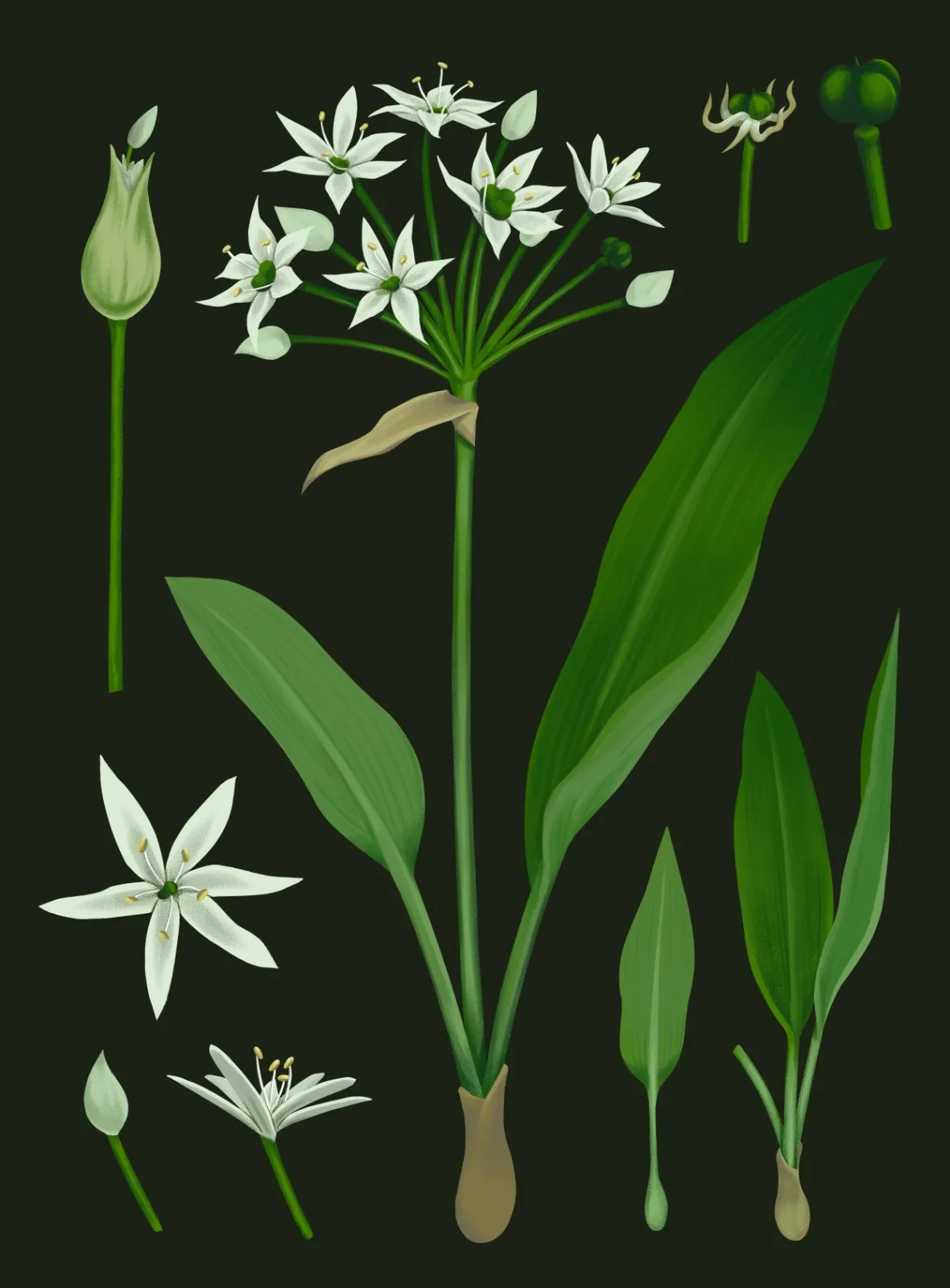
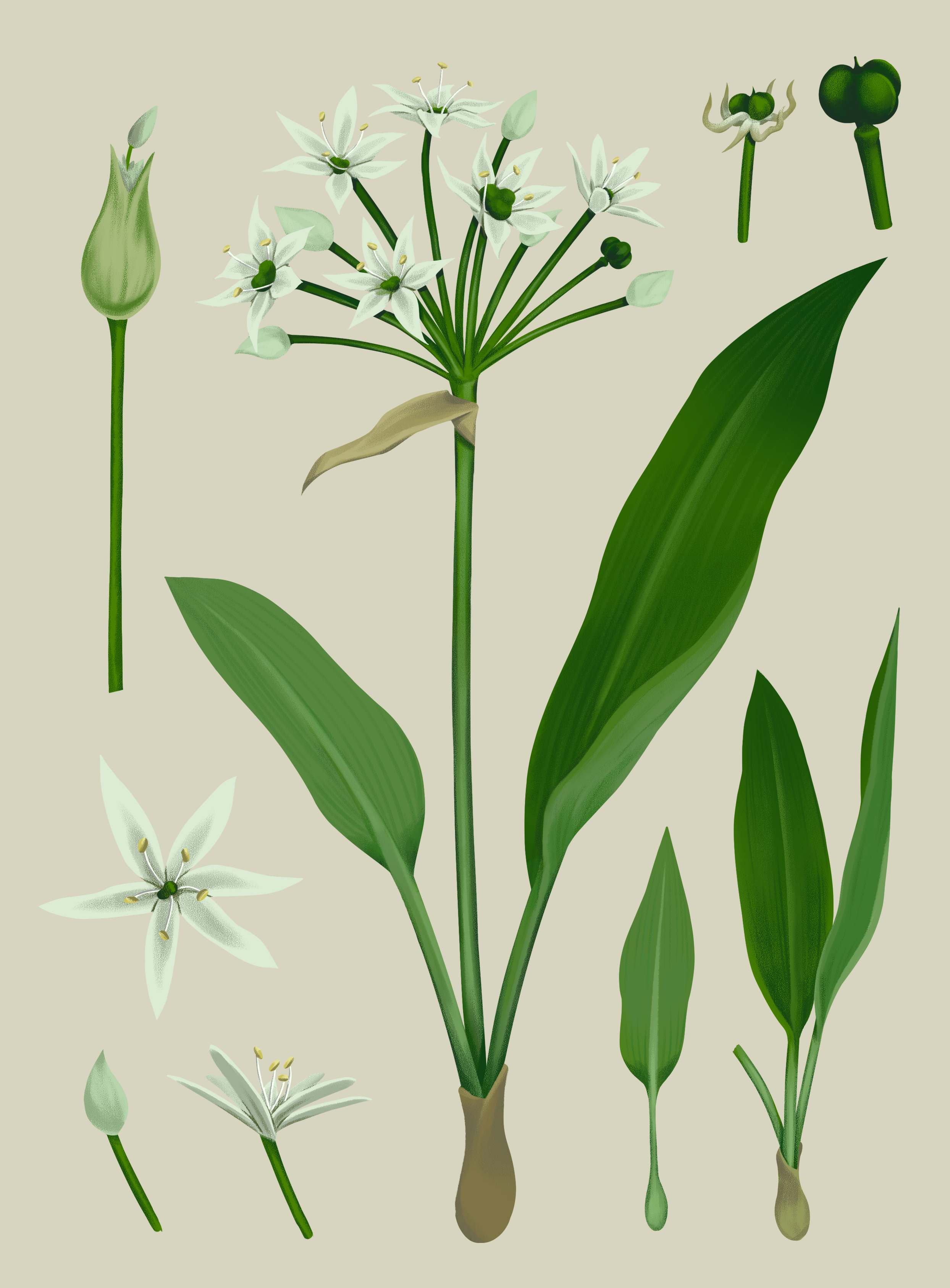
Flat-topped white flower cluster, separate leaf stalks, and a narrow bulb form the clearest overall wild garlic profile.
Key field cue: each leaf emerges on its own stalk. Lily of the Valley does not.
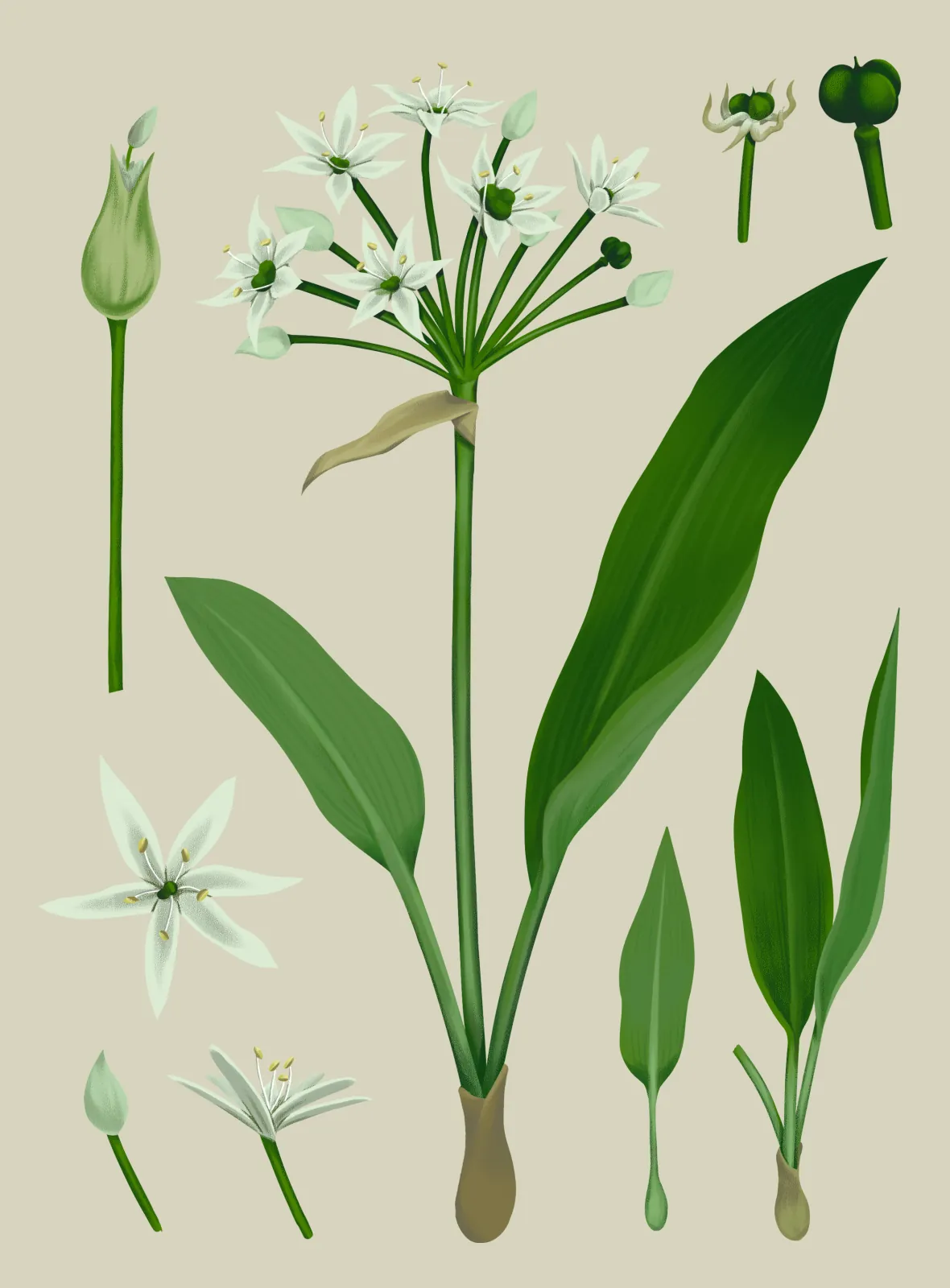
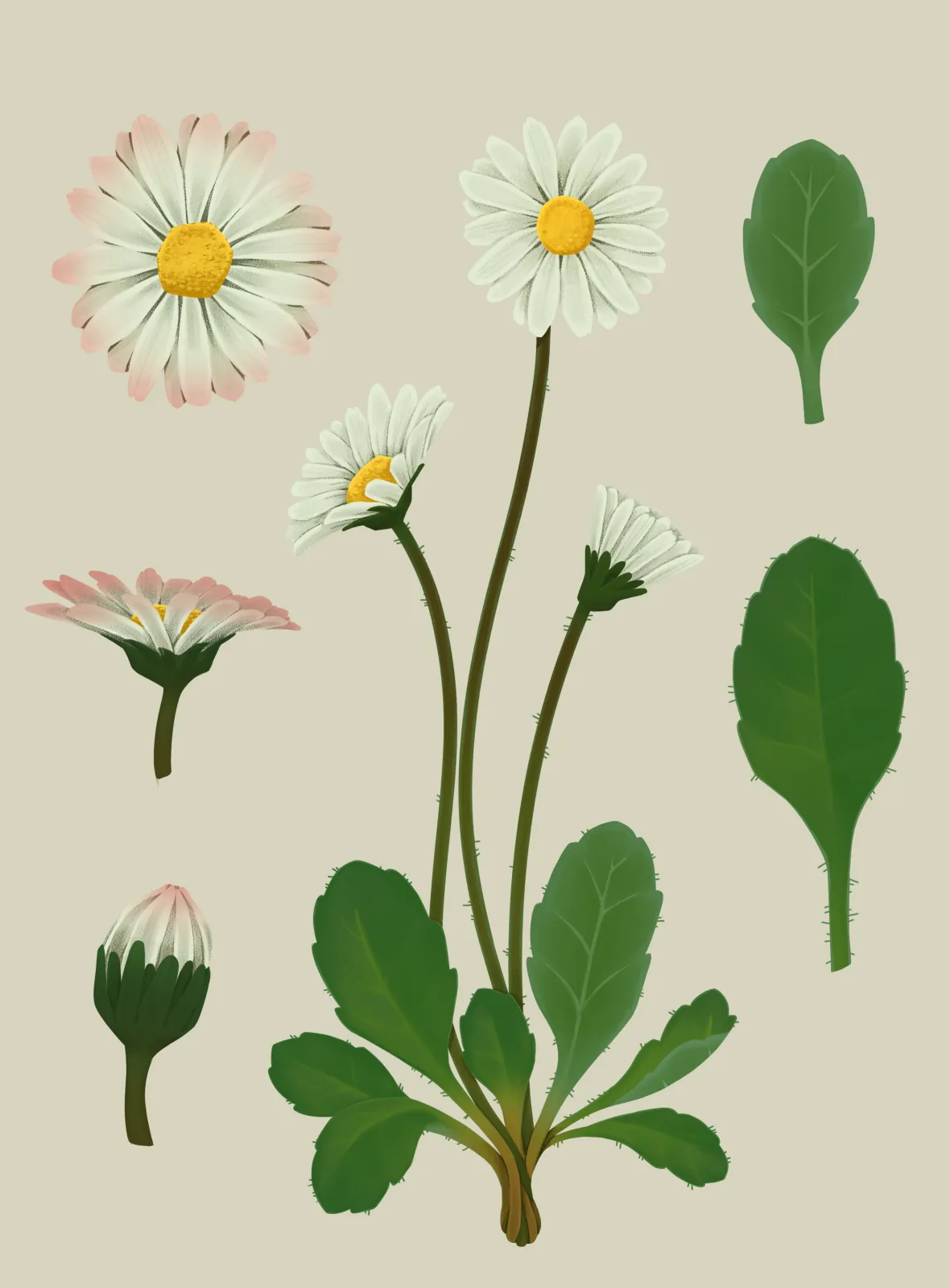
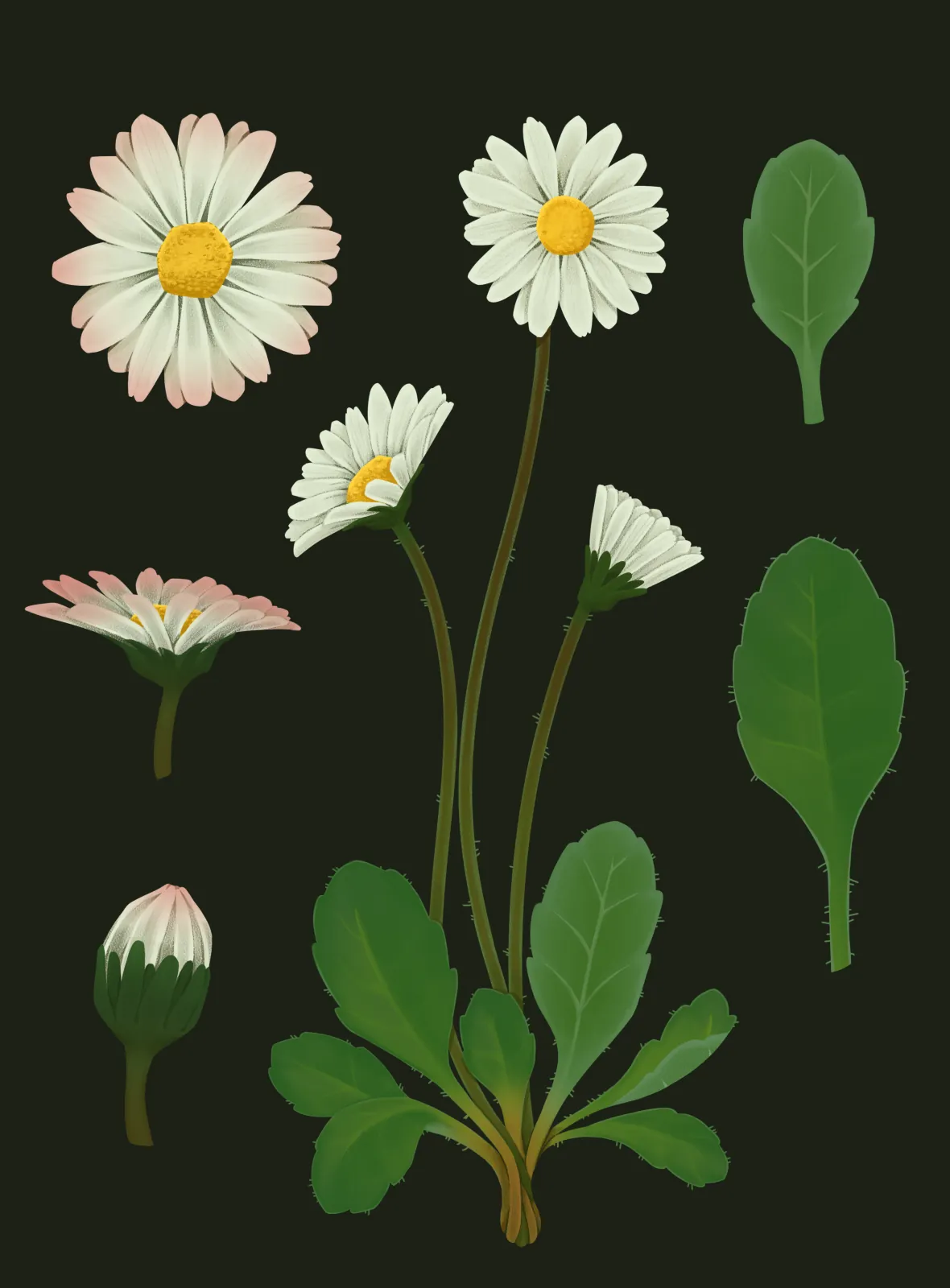
Wild Forager is not built for one-click certainty. It brings together edible wild plants, Germany-focused curation, nearby observations, morphology, seasonality, and confusion risks in one place so plant knowledge can build over time.
Wild Forager supports learning before, during, and after time outdoors by keeping observation context, plant traits, seasonality, and caution in one place.
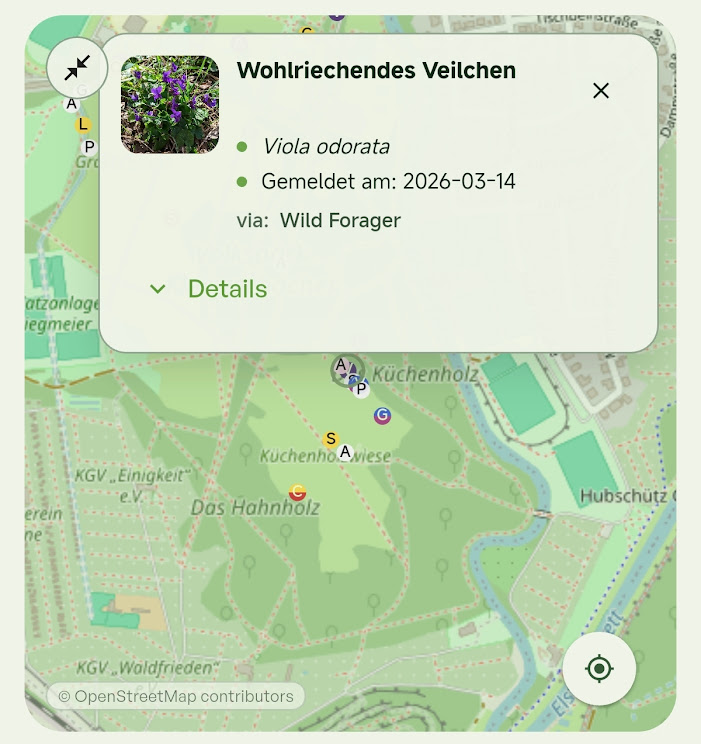
Observation maps help people pay attention to local plant diversity without treating individual records as proof of presence.
Plant pages bring together morphology, habitat cues, seasonality, and confusion risks so comparison becomes more deliberate.
Use the app during walks, with field guides, and across repeated seasons until names turn into real plant knowledge.
Wild Forager supports independent learning, but it does not replace expert guidance, field experience, or independent confirmation.
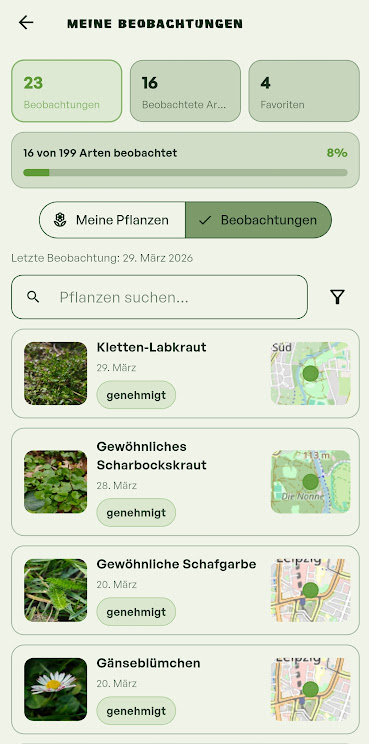
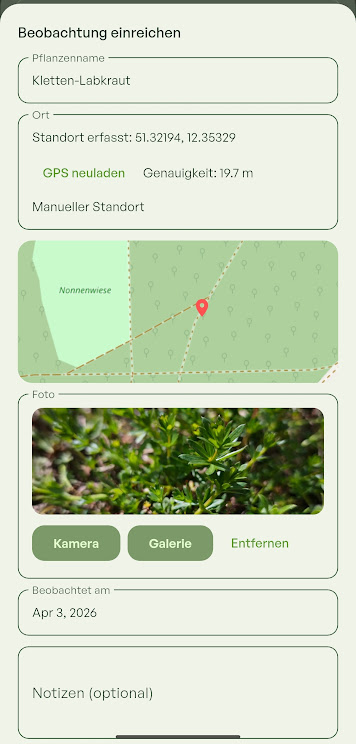
Wild Forager is not only for comparison in the field. It also lets people keep a personal record of what they have seen, where they saw it, and what they want to revisit later.
Store the place, date, and photo together so each record stays tied to a real encounter outdoors.
Write down field details, reminders, or follow-up questions while the plant and place are still fresh in memory.
Keep favorites, revisit earlier finds, and build a steadier sense of which plants have actually become familiar.
Illustrations, photos, traits, habitat context, seasonality, and look-alike warnings come together in one place so what is in front of you can be compared more carefully.
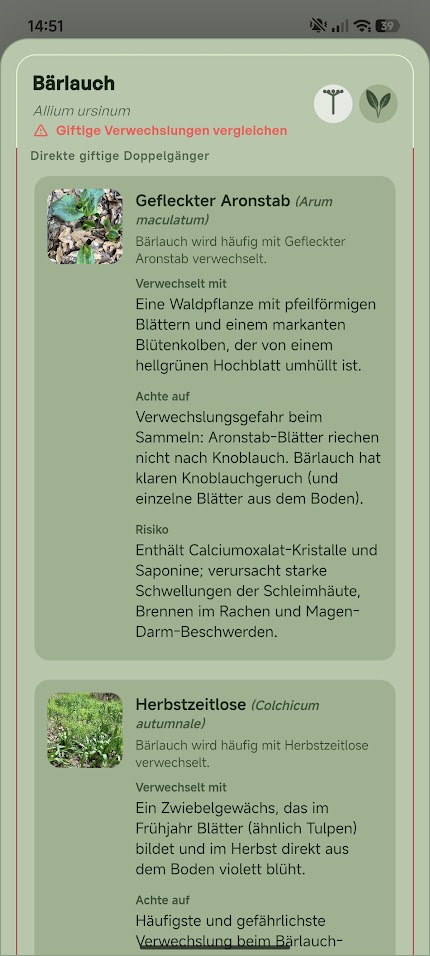
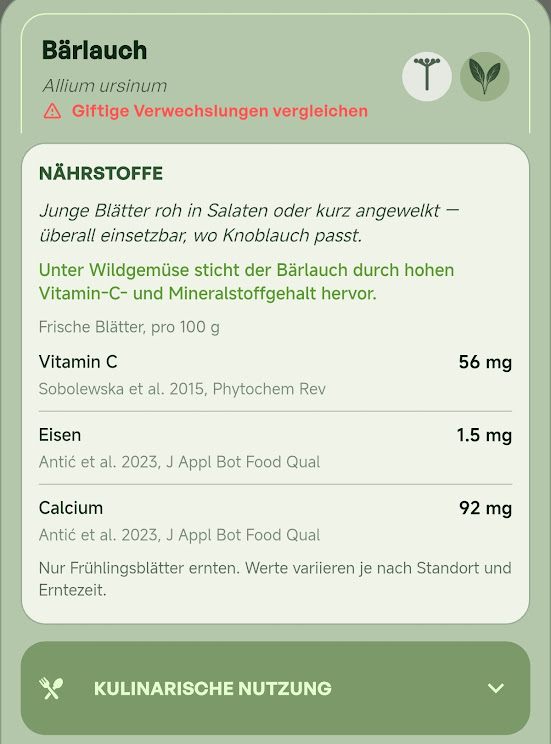
Wild Forager is designed to slow the process down: observe first, compare carefully, and treat habitats as more important than harvest. In the app, these and additional safety recommendations are included directly in the learning flow.
Correct identification is non-negotiable. If traits, habitat, contamination risk, or look-alikes remain unclear, stop there.
Protected areas, protected species, and local rules exist for good reason. Responsible foraging means respecting them without exception.
Harvest only from abundant populations and leave enough for regeneration, wildlife, and the place itself.
Avoid exposing sensitive places or rare species. Good plant education should strengthen conservation, not pressure it.
Correct identification is not enough. Roadsides, industrial areas, and contaminated ground can make a plant risky even when it has been identified correctly.
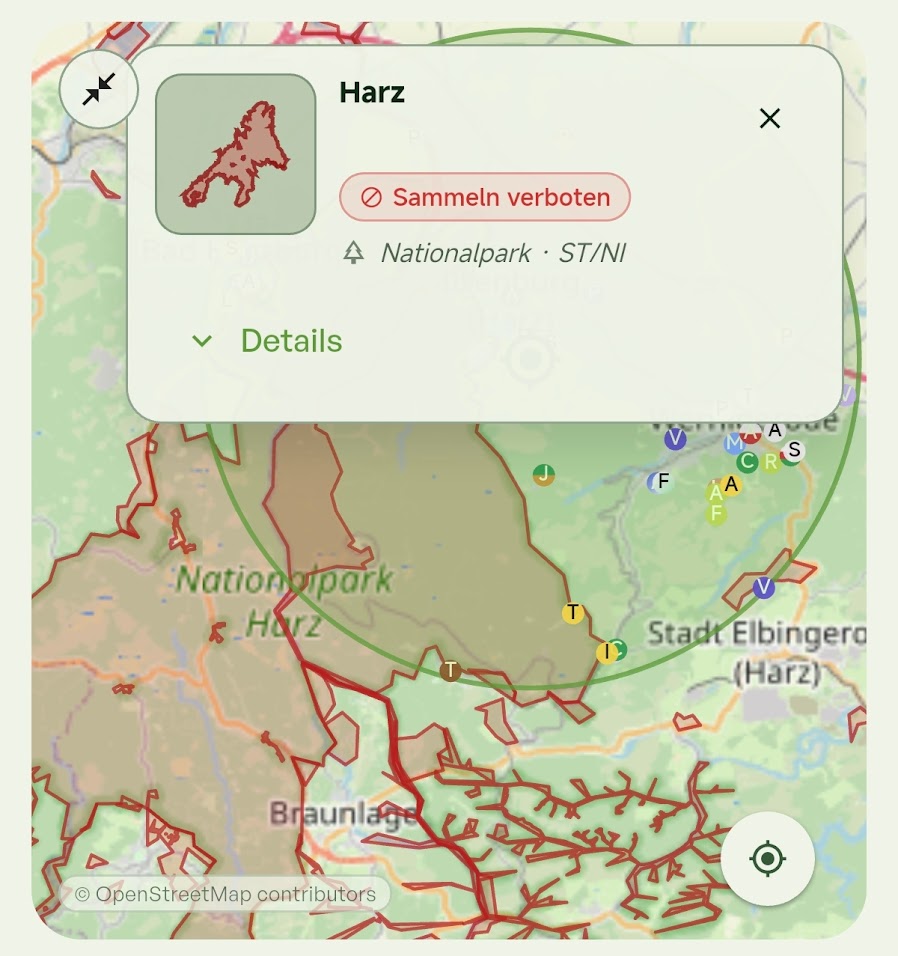
Protected areas are shown directly on the map so people can slow down, avoid sensitive places, and make better decisions before collecting anything.
People once knew the plants around them. That kind of knowledge should not feel unusual.
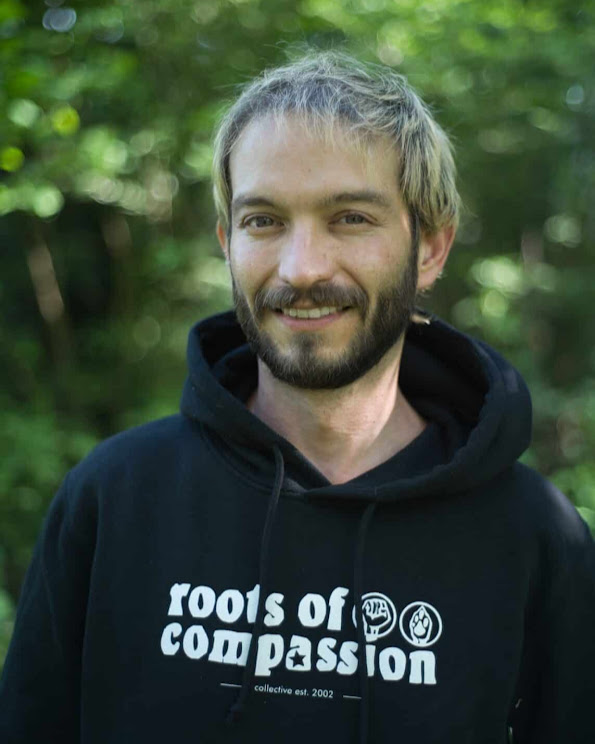
Wild Forager was created by a Colombian biologist working across food systems, data, and public learning.
It grew from a simple observation: many people can name packaged products more easily than the plants growing around them.
The project began as a way to help people notice edible wild plants again and take a careful first step into deeper learning through books, guided walks, and time outdoors.
The aim is simple: make plant knowledge feel closer, slower, and more grounded in place.
Wild Forager is built to support this kind of learning, not replace it. The app works best as a companion to direct learning in the field.
Beginner-friendly foraging workshops in Berlin and Brandenburg with a strong focus on identification, ethics, and urban plant learning.
Visit project →Wild plant walks and foraging workshops in Berlin, exploring edible plants from botanical identification to culinary and herbal practice.
Visit project →Wild herb walks and foraging tours around Leipzig, led in the field and grounded in direct local knowledge.
Visit project →Urban wild herb walks and workshops in Leipzig with a strong focus on botanical traits and culinary uses.
Visit project →Know a project that should be listed here? Write to hello@wildforager.org.
Wild Forager is an independent project for ecological literacy, responsible foraging, and open learning tools. The core app is free and meant to stay that way. Contributions help fund research, maintenance, and continued development without advertising.
Wild Forager is designed as a careful learning tool. These answers clarify what the app is for, and what it is not.
Yes, but as a learning tool. It is meant to support careful comparison, not promise quick certainty.
No. It helps compare traits, seasonality, habitat, and look-alike risks, but it does not replace independent confirmation.
The editorial focus and curation are currently oriented toward Germany.
Not yet. At the moment there is an Android beta and a web test version that runs directly in the browser.
Never collect or eat a plant based on the app alone. Always verify independently and, where possible, cross-check with experienced people or good reference books.
Disclaimer: Wild Forager is an educational tool. It must not be used as the sole basis for collecting or consuming plants. Always verify independently and, where possible, with experienced people. Use is at your own risk.